
26 Federal Plaza
New York, New York · 37 well-documented stories
What stands out here
Conditions that appear in a larger share of this facility's stories than of facility stories in general. Stories run from Mar 2025 to Sep 2026.
- Overcrowding27% vs 6%
Held in a space far over capacity: a holding cell, a bus, an airport facility, a tent.
- Force on family or bystanders24% vs 2%
Physical force was used on a relative, child, observer, or bystander, not only the arrest target.
- Food or water withheld22% vs 10%
The person went without food or water for an extended period, or was given spoiled or inadequate food.
- No bed, sleep, or basic hygiene22% vs 5%
Slept on the floor, no bed or blanket, lights on all night, no shower, no toilet access, or similar.
- Injury needing medical treatment14% vs 7%
The person or a bystander was hurt badly enough to need medical care.
share of stories hereacross all facilities
Everything the stories describe here
- Overcrowding · 10 stories
Held in a space far over capacity: a holding cell, a bus, an airport facility, a tent.
- Force on family or bystanders · 9 stories
Physical force was used on a relative, child, observer, or bystander, not only the arrest target.
- Food or water withheld · 8 stories
The person went without food or water for an extended period, or was given spoiled or inadequate food.
- No bed, sleep, or basic hygiene · 8 stories
Slept on the floor, no bed or blanket, lights on all night, no shower, no toilet access, or similar.
- Injury needing medical treatment · 5 stories
The person or a bystander was hurt badly enough to need medical care.
- Tackled, pinned, or thrown down · 4 stories
The person was tackled, slammed, pinned to the ground, or thrown against a surface.
- Extreme heat or cold · 2 stories
Held in a freezing or dangerously hot space (hieleras, no heat, no air conditioning in summer).
- Medical requests ignored · 2 stories
Requests for care, a doctor, or an emergency response were refused, delayed, or dismissed.
- Abuse or threats by staff · 2 stories
Beatings, threats, humiliation, slurs, or theft by guards or staff.
- Shackled or chained · 1 story
Shackled, chained, zip-tied for long periods, restrained during transport or medical care, or held in a restraint chair.
- Medication withheld · 1 story
Prescribed medication (insulin, HIV drugs, psychiatric medication, seizure drugs, chemotherapy) was taken, withheld, or not provided.
- Family not told · 1 story
Relatives were not informed of the arrest, a transfer, a hospitalization, or a death, or learned of it from the press or other detainees.
- Solitary confinement · 1 story
Placed in isolation or segregation.
- Hunger strike · 1 story
The person or a group refused food in protest.
In their words
“The interview itself was cold and hostile. The officer was rude, dismissive and wouldn't even allow me to look at my husband when telling our love story. When I expressed how deeply I love him and found no flaws in him, I was scolded and told that no one is perfect.”
“I was just a body that they crammed into a room, almost as if to be forgotten.”
“I was just a body that they crammed into a room, almost as if to be forgotten,”
Stories
 Detainees kept on floors without beds or lawyers at NYC ICE facilityDetainees including Sergio Alberto Barco Mercado described sleeping on floors without beds and going without hygiene products at a Manhattan ICE facility. A judge ordered conditions fixed after finding prior orders willfully violated.New York, NY · Sep 24, 2026 · CBS News, ABC News, Bloomberg Law News +1
- Alberto R.M.: Resident of 30 years arrested by ICE at Brooklyn bus stopA Mexican man who had lived in the U.S. for 30 years was detained at a Brooklyn bus stop after being asked for identification. A court ordered his release in August, ruling his detention unlawful.Brooklyn, NY · Jul 8, 2026 · CourtListener
 Three immigrants arrested by ICE at Manhattan courthouses despite judge's orderAn Ecuadorian man, a Guatemalan man and a Dominican man were arrested at Manhattan federal courthouses despite a judge's order restricting such enforcement, part of a broader surge detaining over 10,000 people in five days.New York, NY · Jul 2, 2026 · Common Dreams, The Independent, Karsane
 Ecuadorian man arrested by ICE at NYC immigration court despite judge's orderAn Ecuadorian man who fled persecution and attended a required immigration hearing at 26 Federal Plaza was arrested there and transferred to a Georgia detention center.New York, NY · Jun 26, 2026 · The Intercept
 Rafael R.B.: NYC Council analyst with TPS held by ICE 5 months, granted asylumRafael Andres Rubio Bohorquez, a Venezuelan data analyst for the New York City Council, was arrested at a routine asylum check-in despite having work authorization. He was granted asylum and released on bond after 158 days.Bethpage, NY · Jun 19, 2026 · The City, City & State New York, Patch +7
 Nuvia M.: Woman detained at ICE check-in, denied diabetes medicine in overcrowded Manhattan facilityNuvia Martinez, who has diabetes, was detained at a routine ICE check-in in Manhattan and denied her medication for days in an overcrowded facility with no beds, showers, or enough food.“I was just a body that they crammed into a room, almost as if to be forgotten.” — Nuvia Ventura MartinezNew York, NY · Jun 1, 2026 · The Independent, Washington Post, The City Reporter +3
 Vinely C.N.: Honduran man detained at NYC courthouse despite ICE banVinely Alexander Castillo-Norales, 21, was detained outside his immigration hearing at a Manhattan courthouse, hours after a judge barred such arrests, before being released the same day.Manhattan, NY · May 19, 2026 · USA Today, HuffPost, Boston Globe
 Allan M.: Husband held by ICE 113 days after marriage green card interviewAllan Marrero has been held by ICE for 113 days after a green card interview in New York, separated from his husband Matthew, who is working with clergy and lawyers for his release.New York, New York · May 15, 2026 · Washington Blade, ABC7 New York, NY1 +13
 Hugo A.O.: Shelter Island truck driver, father of newborn, held 23 days by ICEHugo Leonel Ardon Osorio, a Guatemalan truck driver on Shelter Island for over 20 years, was detained while commuting to work and held 23 days. He returned to his family and job in March.“As the primary breadwinner of the home, his wife and their newborn baby have been left not only in terror, not knowing where he has been taken, but also the financial insecurity to buy groceries and pay their rent.” — Anita Boyer, fundraiser organizerGreenport, NY · Mar 1, 2026 · Patch, Suffolk Times, East End Beacon +2
 Thierno D.: Guinean man granted protection held by ICE for deportation to GhanaThierno Diallo, a Guinean man already allowed to stay in the country, was detained at a routine check-in after ICE tried to deport him to Ghana instead. A judge partly granted his request for release.New York, NY · Jan 19, 2026 · PACER Monitor, MidPage
 Aissatou D.: Queens grandmother detained by ICE for two weeks at LaGuardiaAissatou Diallo, a 55-year-old grandmother and home health aide from Queens, was held by ICE for nearly two weeks while traveling to see her son, until a judge ordered her release.Queens, NY · Dec 5, 2025 · CBS News, The City Reporter, Documented
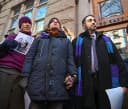 Allan D.M.: Manhattan man's husband detained by ICE at green card interviewAllan Marrero was detained at his green card interview in Manhattan over a missed 2022 hearing neither he nor husband Matthew knew about, and was given only 30 seconds to say goodbye.“The interview itself was cold and hostile. The officer was rude, dismissive and wouldn't even allow me to look at my husband when telling our love story. When I expressed how deeply I love him and found no flaws in him, I was scolded and told that no one is perfect.” — Matthew MarreroManhattan, NY · Nov 24, 2025 · AM New York, Documented, PIX11 +1
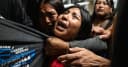 Immigrants arrested by masked agents at 26 Federal Plaza for five monthsA photojournalistic report documents five months of immigration arrests by masked federal agents in and around 26 Federal Plaza in New York City, and their effects on immigrants there.New York, NY · Nov 3, 2025 · The City Reporter, New York Magazine, Chicago Tribune
 Germán P.: Honduran delivery driver held by ICE, promised $1,000 to leave, never paidGermán Pineda, a Honduran delivery driver here 14 years, was promised a flight and $1,000 to leave voluntarily but never received the payment after arriving in Honduras.Manhattan, NY · Oct 25, 2025 · The Guardian, The Lens, The Fappening Newz +1
 Four U.S. citizens held 24 hours without charges in ICE Chinatown sweepFour U.S. citizens were held nearly 24 hours without charges at 26 Federal Plaza during an ICE sweep in Chinatown, released after their families filed missing persons reports and a congressman spoke publicly.New York, NY · Oct 21, 2025 · ABC News, ABC7 New York, The Cut +2
 Agents detain man as wife and child watch in Manhattan courtA man was seized by a dozen officers outside his courtroom in Manhattan while his wife and a small boy watched; a woman clinging to him was forcibly pulled away as he was taken.New York, NY · Oct 11, 2025 · BBC, CBS News, Deer Social
 Jorge: U.S. citizen's husband deported by ICE to Ecuador before meeting newborn daughterJorge, an Ecuadorian man from Queens, was deported after a routine check-in and missed the birth of his newborn daughter, Maite. His wife Jessica now cares alone for three children and lost their apartment.New York, NY · Oct 5, 2025 · CNN, AM New York, ReportWire
 Cameraman thrown to ground by ICE officers at NYC federal plazaA cameraman documenting an immigrant's arrest at 26 Federal Plaza was thrown to the ground by ICE officers and taken away on a stretcher.New York, NY · Sep 30, 2025 · CBS News, CNN, Associated Press +2
- Immigrant from Peru detained by ICE at asylum hearing in NYCAn immigrant from Peru was arrested by ICE during an asylum hearing at 26 Federal Plaza, in an incident where officers also shoved and injured journalists documenting the arrest.New York, NY · Sep 30, 2025 · CBS News, CNN, Associated Press +2
- Olga F.: Journalist shoved to floor by ICE officers at NYC federal plazaPhotojournalist Olga Fedorova was shoved to the floor by ICE officers at 26 Federal Plaza while documenting an immigrant's arrest at an asylum hearing. She says agents gave no warning before shoving her.New York, NY · Sep 30, 2025 · CBS News, CNN, Associated Press +2
- Turkish journalist hospitalized after being thrown to ground by ICE officersA journalist for a Turkish media outlet was thrown to the ground by ICE officers at 26 Federal Plaza, left on the ground for about half an hour, and hospitalized with a neck brace.New York, NY · Sep 30, 2025 · CBS News, CNN, Associated Press +2
 Three journalists attacked by ICE agents at Federal Plaza, one hospitalizedThree journalists covering an arrest at 26 Federal Plaza on September 30 were assaulted by masked ICE agents; one was knocked down and hospitalized with head injuries.New York, NY · Sep 30, 2025 · AM New York, CBS News, The Hill
- Vural E.: Journalist knocked unconscious by ICE agent at Federal PlazaL. Vural Elibol, a cameraman for Turkey's Anadolu Agency, was shoved to the floor by an ICE agent at 26 Federal Plaza, knocking him unconscious for 35 to 40 minutes.New York, NY · Sep 30, 2025 · AM New York, Associated Press, NBC News +4
 Brad L.: NYC Comptroller arrested at ICE facility protest, found not guiltyNYC Comptroller Brad Lander was acquitted after being arrested during a sit-in at a Manhattan ICE facility, where he and state lawmakers demanded access to detention cells.New York, New York · Sep 18, 2025 · The City Reporter, ABC7 New York, New York Attorney General +4
- Luis: Ecuadorian father arrested by masked ICE agents as children clung to himLuis, an Ecuadorian mechanic and father of three who fled corruption 2.5 years ago, was arrested by masked agents outside a courtroom as his children clung to him and one daughter was pulled away.New York, NY · August 26, 2025 · MSN, AM New York, World Today News
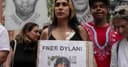 Joselyn C.S.: Ecuadorean student detained 10 days by ICE without menstrual productsJoselyn Chipantiza-Sisalema, 20, an Ecuadorean public school student, was held about 10 days at a New York ICE facility, menstruating for five days without enough sanitary pads. She was later moved to Louisiana and released after roughly three weeks.NY · Aug 11, 2025 · The New York Times, The City, MacArthur Justice +1
 Geovani M.O.: Bronx father held 6 days by ICE without shower or toothbrushGeovani Maradiaga Ochoa, a Honduran immigrant who lived in the Bronx 20 years with his U.S. citizen wife and daughter, was held six days at a check-in without a shower or toothbrush.Bronx, NY · Aug 11, 2025 · The City, Chicago Sun-Times, Block Club Chicago +1
- Hugo S.T.: Colombian construction worker held nearly 3 weeks by ICE without bathingHugo Elias Sanchez Trillos, a Colombian construction worker, was held nearly three weeks after ICE raided his home seeking someone else, going without a bath and losing nearly 20 pounds on two cold meals a day.Aug 11, 2025 · The City
 Derlis C.T.: Queens 11th grader forced to sleep sitting up in ICE detentionDerlis Snaider Chusin Toaquiza, a 19-year-old Ecuadorian asylum-seeker and Queens high schooler, was detained at a court hearing and held in overcrowded facilities for weeks. He reunited with family after a $20,000 bond secured his release.Ridgewood, NY · Jul 18, 2025 · AM New York, Patch, FOX 5 New York +6
 Efrain R.: Asylum seeker re-detained after hunger strikeEfrain Rodriguez, a father of two, was pulled into ICE custody during a routine check-in and later had to pay $5,000 to secure his release.New York, NY · Jul 17, 2025 · AM New York, massachusettsdigitalnews.com
Immigrants report sleeping on concrete at NYC ICE siteImmigrants held at a Lower Manhattan ICE site reported cramped rooms, little food, no bathing, and sleeping on concrete floors, with some stays lasting up to 10 days and limited medical care or family contact.New York, NY · Jul 9, 2025 · Gothamist, Newsday, Brooklyn Eagle +2
 Paraguayan asylum seeker wins court-ordered release after ICE arrest outside immigration hearingA Paraguayan asylum seeker living with his sister in Flushing was arrested leaving his own immigration hearing and held in crowded conditions; a judge ruled his detention unlawful and ordered him freed.Manhattan, NY · Jul 2025 · Washington Post, CourtListener, MidPage +2
 Undocumented immigrants arrested at Manhattan immigration court based on fabricated ICE authorityImmigrants attending required hearings at a Manhattan immigration court were arrested under ICE authority later revealed as fabricated, with agents separating families and moving detainees to block access to lawyers.New York, NY · Jun 17, 2025 · AM New York, The Prospect, Trump File
- Roberto C.O.: Man detained for days in overcrowded NYC ICE facilityRoberto Chilavert Olmedo was held for days at 26 Federal Plaza during the summer 2025 ICE surge and described the conditions in written testimony as a nightmare.“I was just a body that they crammed into a room, almost as if to be forgotten,” — Nuvia MartinezManhattan, NY · Jun 2025 · Washington Post, ACLU
- 20-year-old Ecuadorian woman held nine days by ICE sleeping on floorA 20-year-old Ecuadorian woman was detained for nine days at 26 Federal Plaza without a bed, sleeping on the floor with dozens of others, before being released by a federal judge's order.“I was just a body that they crammed into a room, almost as if to be forgotten,” — Nuvia MartinezManhattan, NY · Jun 2025 · Washington Post, Leagle, Trump Whack +2
- Up to 100 detainees held on cement floors at NYC ICE facilityDetainees including Nuvia Ventura Martinez and Carlos Lopez Benitez described being held with up to 100 others in a Manhattan ICE facility, sleeping on cement floors for days with no beds or showers.Manhattan, NY · Jun 1, 2025 · The Independent, CourtListener, CourtListener +1
 Jose and Josue: Brothers deported at ICE check-in, leaving mother and nonverbal U.S. citizen brotherAlma Lopez Diaz's sons Jose, 20, and Josue, 19, were detained and deported to El Salvador during a routine ICE check-in, separating them from their mother and 8-year-old brother with Moebius syndrome.New York, NY · Mar 12, 2025 · New York Magazine, Page, Hero Luigi +2
Where people stood at the latest report
Each square is one percent of these stories. Read it with care: people who are still detained or already deported have far less access to reporters and lawyers than people who were released, so this mix reflects who gets covered more than how cases end.
- Deported 5%
- Self-deported 3%
- Still detained 8%
- Released 32%
- Unknown 51%