
Eloy Detention Center
Eloy, Arizona · 38 well-documented stories
What stands out here
Conditions that appear in a larger share of this facility's stories than of facility stories in general. Stories run from Jan 2025 to Sep 2026.
- Medical requests ignored24% vs 15%
Requests for care, a doctor, or an emergency response were refused, delayed, or dismissed.
- Pregnant or postpartum in custody11% vs 3%
The detained person was pregnant, miscarried, gave birth, or was postpartum or breastfeeding while held.
- Abuse or threats by staff11% vs 6%
Beatings, threats, humiliation, slurs, or theft by guards or staff.
share of stories hereacross all facilities
Everything the stories describe here
- Medical requests ignored · 9 stories
Requests for care, a doctor, or an emergency response were refused, delayed, or dismissed.
- Food or water withheld · 4 stories
The person went without food or water for an extended period, or was given spoiled or inadequate food.
- Pregnant or postpartum in custody · 4 stories
The detained person was pregnant, miscarried, gave birth, or was postpartum or breastfeeding while held.
- Abuse or threats by staff · 4 stories
Beatings, threats, humiliation, slurs, or theft by guards or staff.
- No bed, sleep, or basic hygiene · 3 stories
Slept on the floor, no bed or blanket, lights on all night, no shower, no toilet access, or similar.
- Shackled or chained · 3 stories
Shackled, chained, zip-tied for long periods, restrained during transport or medical care, or held in a restraint chair.
- Overcrowding · 3 stories
Held in a space far over capacity: a holding cell, a bus, an airport facility, a tent.
- Punished for complaining or organizing · 2 stories
Isolation, transfer, lost privileges, or threats after the person complained, filed a grievance, spoke to media, organized, or joined a hunger strike.
- Medication withheld · 2 stories
Prescribed medication (insulin, HIV drugs, psychiatric medication, seizure drugs, chemotherapy) was taken, withheld, or not provided.
- Died in custody or soon after · 2 stories
The person died while detained, during transport, or within days of release or deportation.
- Extreme heat or cold · 2 stories
Held in a freezing or dangerously hot space (hieleras, no heat, no air conditioning in summer).
- Solitary confinement · 1 story
Placed in isolation or segregation.
- Family not told · 1 story
Relatives were not informed of the arrest, a transfer, a hospitalization, or a death, or learned of it from the press or other detainees.
- Injury needing medical treatment · 1 story
The person or a bystander was hurt badly enough to need medical care.
- Pepper spray, tear gas, or taser · 1 story
Agents used pepper spray, tear gas, a taser, or similar on the person or a crowd.
In their words
“This place no longer feels like home to us, especially after seeing how my daughter’s been treated,”
“That was a slap in the face. I'm here serving the country, and this happens to my own family.”
“I'm in a place called Tapachula, Chiapas”
Stories
 Pietro G.L.: Gay Brazilian man deported to Equatorial Guinea despite winning torture protection rulingPietro Graza de Lima, who ran a small business in Orlando for seven years after fleeing violence in Brazil, won protection from deportation but was flown instead to Equatorial Guinea, where he lost contact with his lawyers.Orlando, FL · Sep 11, 2026 · valorinternational.globo.com, Miami Herald, Lookout News +4
 Filipina nurse with valid work permit detained by ICE at Phoenix airportA 22-year-old Filipina nurse working in a Phoenix hospital's acute-care unit was detained at the airport despite holding a valid work permit; she awaits a September 4 court hearing.Phoenix, AZ · Sep 4, 2026 · The Global Filipino Magazine, Filipino Times, Bombo Radyo
 Julio B.: Miami mechanic, 72, deported to Tapachula, Mexico, after 46 years hereJulio Borrell, 72, a Cuban mechanic in Florida since 1980 and father of seven, was deported to Tapachula, Mexico after 46 years here. He now patches tires on the street, saving to rent a room.“I'm in a place called Tapachula, Chiapas” — Julio BorrellMiami, FL · Aug 26, 2026 · Latin Times, Cuba Headlines, CiberCuba +1
 Mother shielded from deportation to Colombia separated from children at ICE check-inA Colombian mother was separated from her two young children at a routine ICE check-in in Baltimore and held for months in Arizona, despite a judge ruling she faced torture if deported.Baltimore, MD · Aug 20, 2026 · Arizona Center for Investigative Reporting, Gila Valley Central, Calo News +1
 Olga P.: Mayan translator deported to Guatemala, leaving four U.S.-citizen children behindOlga Perez, 47, a Mam-language interpreter who volunteered for decades helping police, courts and hospitals in Palm Beach County, was deported to Guatemala after nearly 30 years, leaving behind four U.S.-citizen children.Florida · Jul 31, 2026 · USA Today, Palm Beach Post, Blue Water Healthy Living +2
 Mabel: Oakland asylum seeker with work permit detained by ICE at Phoenix airportMabel, an Oakland resident from Ecuador with a pending asylum claim and valid work permit, was detained by ICE at the Phoenix airport and sent to Eloy Detention Center.Phoenix, AZ · July 30, 2026 · San Francisco Chronicle
- Celestin D.: Gay asylum seeker redetained by ICE weeks after judge ordered releaseCelestin Dima, a gay asylum seeker from Burkina Faso who fled persecution, was redetained during a routine check-in weeks after a judge ordered his release. He now wears a GPS monitor and faces deportation to an unnamed country.New York, NY · Jul 17, 2026 · Arizona Center for Investigative Reporting, Gila Valley Central, Calo News +1
 Erianny R.B.: Venezuelan woman with valid TPS held by ICE for 9 monthsErianny Rodriguez Balza, a Venezuelan woman with valid protected status, was held for about nine months even after a government attorney acknowledged her legal status. She has since been released.Arizona, AZ · Jul 7, 2026 · Tucson.com, Town News
 Seven detainees confirmed with measles at Arizona ICE facilitySeven detainees tested positive for measles at an Arizona ICE facility, with more quarantined at nearby centers. Lawmakers are demanding details on medical care and legal access during the lockdown.Arizona, AZ · Jul 7, 2026 · Tucson.com, AZ Family, KJZZ +4
 Wendy B.S.: Pregnant Honduran woman hospitalized multiple times in ICE custodyWendy Baca Sánchez, a Honduran woman five months pregnant, has been hospitalized multiple times since being detained near San Miguel, Arizona, in late June. She remains held at Eloy Detention Center.San Miguel, AZ · Jun 2026 · Tucson.com, Saddlebag Notes
 Karla T.: DACA recipient arrested by ICE at Tucson home without warrantKarla Toledo, 31, a DACA recipient and community organizer with no criminal record, was detained at her Tucson home without a warrant and later freed on $1,500 bond after community pressure.Tucson, AZ · May 25, 2026 · Tucson.com, The Arizona Republic, KTAR +16
 Everlee W.: Green card holder detained by CBP at LAX, shackled and denied foodEverlee Amelia Wihongi, a 37-year-old lawful permanent resident who has lived in the U.S. since age six, was detained at LAX returning from a family trip and shackled on a floor for 14 hours during transfers across four states.“This place no longer feels like home to us, especially after seeing how my daughter’s been treated,” — Betty Wihongi, her motherLos Angeles, CA · May 21, 2026 · KSL, The Guardian, New Zealand Herald +12
 Aniceto H.R.: Soldier's father detained by ICE in front of his two sonsAniceto Hernandez-Reyna was detained at a gas station near Phoenix in front of his two younger sons while his daughter served in the Army. He remains held at Eloy Detention Center despite a pending request for parole.“That was a slap in the face. I'm here serving the country, and this happens to my own family.” — Army Spc. Jasmine HernandezPhoenix, AZ · May 16, 2026 · ABC News, OAF Nation, SSB Crack +2
Yari R.M.: Green card holder's cancer worsens during year-plus in Arizona ICE detentionArbella "Yari" Rodríguez Márquez, a green card holder, has been held over a year at Eloy Detention Center while her leukemia returned and worsened, causing major weight loss and new health problems. Lawmakers and advocates are demanding her release.Eloy, AZ · May 15, 2026 · LinkedIn, Arizona Public Media, Arizona Public Media +5
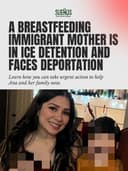 Ana D.: Breastfeeding mother of two deported after ICE agent posed as case managerAna Delgado, a Venezuelan mother of two in San Antonio, was lured outside and detained while holding her young son. She developed mastitis in detention after being denied a breast pump, then was deported, separating her from her kids.TX · May 8, 2026 · Univision, Register-Guard, MSN +3
 Yari R.M.: Queer woman with leukemia held by ICE over a year, vomiting bloodA 39-year-old queer woman with leukemia has been held over a year at Eloy Detention Center, losing 70 pounds and developing new illnesses while receiving only Tylenol. Lawmakers and advocates have called for her humanitarian release.Nogales, AZ · Apr 28, 2026 · Copper Courier, LGBTQ Nation, Lookout News +8
 Karla S.: Trans organizer detained at Phoenix ICE check-in, held in men's unitKarla Saenz, a 26-year-old Venezuelan transgender organizer with Trans Queer Pueblo, was detained at a routine check-in and held in a men's unit at Eloy Detention Center, where she contracted COVID-19.Phoenix, AZ · Apr 23, 2026 · Lookout News, The Advocate, High Country News
- Karla S.: Trans organizer detained by ICE denied hormone therapy, medical neglectKarla Sáenz, a 26-year-old transgender organizer from Venezuela, was held a month in a men's unit at Eloy Detention Center, denied hormone therapy and showers. A judge ordered her release in April.Phoenix, AZ · Apr 22, 2026 · Copper Courier, LGBTQ Nation, Lookout News +3
- Willian Y.B.: Ecuadorian asylum seeker held five months drops case facing deportation to HondurasWillian Yacelga Benalcazar fled gang threats in Ecuador and spent five months in detention facing deportation to Honduras instead. Facing more months behind bars, he gave up his asylum case and agreed to leave for Ecuador.Eloy, AZ · Apr 16, 2026 · CBS News, BetReview, GN Youth
- Yesenia M.V.: Pregnant woman held four months by ICE, no ultrasound until seventh monthYesenia Mejia-Valesquez (a pseudonym), held four months at Eloy, missed early prenatal care and later learned she had preeclampsia and her baby needs heart surgery. She was released to family at about eight months pregnant.Eloy, AZ · Apr 2026 · Firrp
- Woman with broken ankle held by ICE over a year without surgeryA woman with a broken ankle was detained at Eloy Detention Center for over a year, just a day before her scheduled surgery, and never received the operation or a diabetic diet despite her diagnoses.Eloy, AZ · Apr 2026 · Firrp
 Beatriz P.C.: Pregnant woman miscarries in ICE detention, still heldBeatriz Pastrana Candela, a mother of three including a 14-year-old, miscarried at Eloy Detention Center after staff repeatedly told her she wasn't pregnant. Five months later she remains detained, separated from her children.Eloy, AZ · Apr 1, 2026 · Lookout News, Phoenix New Times, Standing Record +1
- Kelly Y.: Peoria sushi shop owner held 8 months by ICE, now freeKelly Yu, who owns two West Valley sushi restaurants and has no criminal record, spent nearly eight months in ICE detention before a federal judge ordered her release.Peoria, AZ · Feb 20, 2026 · 12News, KTAR, translatinacoalition.org
 Jessica C.D.: DACA recipient held by ICE at Eloy, unable to attend her trialJessica Marlene Corrales-Duarte, 32, a DACA recipient, lost her status after a felony indictment and is now held at Eloy Detention Center, unable to attend her own Pima County trial.Jan 15, 2026 · Tucson Spotlight, Calo News, Arizona Public Media +1
 Maria Cristina T.C.: Hearing-impaired 71-year-old great-grandmother held 10 months by ICE in ArizonaMaria Cristina Tapia Cornejo, 71, a great-grandmother with a hearing impairment and family ties in Arizona, has been held at Eloy Detention Center for over 10 months and is appealing her deportation order.Arizona, AZ · Jan 2026 · USA Today, The Arizona Republic, Tucson.com +1
 Khadija: Bisexual Ghanaian woman granted protection shackled and deported to Cameroon by ICEKhadija, a bisexual Ghanaian woman granted protection from deportation, was shackled and deported to Cameroon anyway in January 2026. She now lives in a crowded room there, afraid to go outside, with only temporary permission to stay.Eloy, AZ · Jan 2026 · Immigration Equality, Third Country Deportation Watch
 Kamel M.: Syrian man held 14 months by ICE despite winning protectionKamel Maklad, a Syrian man who migrated through Venezuela, was freed from Eloy Detention Center after 14 months, even though he had already won his case and was granted protection from deportation in 2024.Eloy, AZ · Dec 9, 2025 · Calo News, Prism Reports, Tucson.com
 Yassine H.: UA student held a month by ICE over clerical visa issueYassine Halhoul, 21, a University of Arizona aerospace engineering student from Morocco, spent a month in ICE detention over a clerical visa issue, describing poor food and sleep conditions before being released on an ankle monitor in November.Tucson, AZ · Oct 21, 2025 · Arizona Wildcat, Tucson News Now, WVUA 23 +1
 Judas R.: Arizona man detained by ICE while traveling to workJudas Rivera, 21, who came to Arizona as a child, was detained by ICE while driving to his Chick-fil-A job; agents initially listed his birth country incorrectly as Afghanistan instead of Mexico. He remains held awaiting a court hearing.Mesa, AZ · Oct 21, 2025 · Copper Courier, LinkedIn
 Maikol C.: Yuma barber with pregnant U.S. citizen wife detained by ICE mid-haircutMaikol Carreno, a 24-year-old Venezuelan barber in Yuma, was detained mid-haircut and sent to Eloy Detention Center. His wife, nearing childbirth, struggled for days to reach him.Yuma, AZ · Sep 26, 2025 · AZ Family, Copper Courier, Univision
 Óscar R.D.: 58-year-old man with Alzheimer's and cancer dies in ICE custody in ArizonaÓscar Rascón Duarte, 58, who had lived in the U.S. since 1976 and suffered Alzheimer's, kidney cancer and hepatitis C, died in ICE custody at an Arizona hospital in September.Eloy, AZ · Sep 8, 2025 · Physicians for Human Rights, Univision, Transparency Cascade +3
 Balbino M.: Arizona dad detained by ICE after vehicle registration mistakeBalbino Mayora, an Arizona resident for nearly 25 years and a business owner, was arrested outside a courthouse following a vehicle registration case and taken to Eloy Detention Center. His family is fighting for his release.Phoenix, AZ · Aug 26, 2025 · Copper Courier, KVOA, Washington Post
- Arizona-raised woman deported after ICE raid on Colt Grill restaurantA 23-year-old woman raised in Cottonwood, Arizona since infancy and a high school graduate was arrested when ICE raided the restaurant where she worked, then deported to Mexico, separated from her three citizen brothers.Cottonwood, AZ · Jul 15, 2025 · USA Today, The Arizona Republic, Copper Courier +2
 Detainees at Arizona's Eloy Detention Center report forced walks until faintingRep. Yassamin Ansari visited Eloy Detention Center and heard from over 20 detainees who reported being forced to walk outside until fainting, manipulated air conditioning, and illness. She has asked DHS for answers.Eloy, AZ · May 29, 2025 · KJZZ, U.S. House of Representatives, KOLD
 Arbella R.M.: Woman with leukemia held over a year in Arizona ICE detentionArbella Rodríguez Márquez, who has leukemia and lost her green card, has been held over a year at Eloy Detention Center, losing 60 pounds as lawmakers seek her release.Eloy, AZ · Feb 10, 2025 · Newsweek, Hindustan Times, Arizona Public Media +2
 Yari R.M.: Cancer patient held by ICE over a year loses 60 poundsArbella "Yari" Rodríguez Márquez, 47, has spent over a year at Eloy Detention Center with leukemia, losing 60 pounds. Arizona lawmakers and Rep. Yassamin Ansari are now asking ICE to release her.Eloy, AZ · Feb 10, 2025 · Breezy Scroll, Copper Courier, Yassamin For Congress +1
 Arbella R.M.: Phoenix woman with leukemia denied medical care in ICE detentionArbella "Yari" Rodríguez Márquez, 39, has leukemia and has been held at Eloy Detention Center since February 2025, losing 70 pounds and coughing up blood without seeing an oncologist.Eloy, AZ · Feb 10, 2025 · Copper Courier, Phoenix New Times, ABC15
 Serawit G.D.: Ethiopian asylum seeker dies in ICE custodySerawit Gezahegn Dejene, a 45-year-old Ethiopian asylum seeker, died in ICE custody after months of declining health; reports point to untreated HIV, while ICE says the cause remains unknown.Eloy, AZ · Jan 29, 2025 · Newsweek, Latin Times, ethiopanorama.com +2
Where people stood at the latest report
Each square is one percent of these stories. Read it with care: people who are still detained or already deported have far less access to reporters and lawyers than people who were released, so this mix reflects who gets covered more than how cases end.
- Died 5%
- Deported 13%
- Self-deported 5%
- Still detained 47%
- Released 24%
- Unknown 5%